




How to Choose the Right Press Machine ?
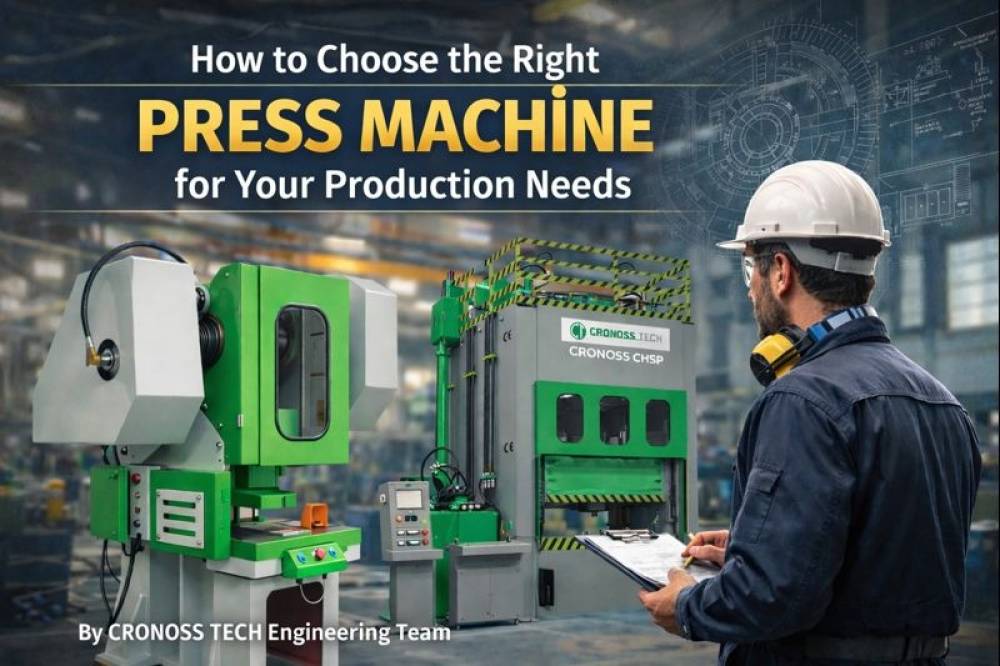
How to Choose the Right Press Machine ?
22-01-2026
Choosing the right press machine, whether a hydraulic press or a mechanical (eccentric) press, is one of the most critical decisions in sheet metal production. A correct investment directly affects production efficiency, product quality, operating costs, and the long-term performance of the machine.
In this article, we outline the key criteria that must be carefully evaluated before investing in a press machine.
1. Clearly Define Your Application Requirements
Starting the press machine selection process by focusing solely on model or price often leads to incorrect investments. The first and most important step is to clearly define your production requirements.
Key questions to consider include:
- What types of materials will be processed?
- What is the maximum sheet thickness?
- Will the operations include cutting, forming, deep drawing, or punching?
- Is the production volume low, medium, or high?
Press machine investments made without a clear definition of application requirements often result in overcapacity or insufficient machine capability.
2. Tonnage Selection Is More Than Just a Number
Press tonnage is one of the most frequently misunderstood technical parameters. Selecting a tonnage higher than required increases energy consumption and operating costs, while insufficient tonnage can lead to die damage, quality issues, and safety risks.
Tonnage calculation depends on several factors:
- Material type and tensile strength
- Sheet thickness
- Die geometry
- Stroke length and working height
Correctly calculated tonnage ensures stable, safe, and efficient operation throughout the machine’s service life.
3. Mechanical Press or Hydraulic Press?
One of the most important decisions in press machine selection is choosing between a mechanical press and a hydraulic press. Each type offers advantages depending on the application.
Mechanical (Eccentric) Presses
- Suitable for high-speed, repetitive operations
- High efficiency in mass production
- High energy efficiency per stroke in continuous operations
Hydraulic Presses
- Provide full force control throughout the stroke
- Ideal for deep drawing and forming applications
- Offer flexibility in pressure and stroke adjustments
The correct press type should be selected based on the required balance between speed, precision, and process flexibility.
4. Frame Rigidity and Structural Design
One of the most critical yet often overlooked aspects of press machines is frame rigidity, which directly impacts production quality.
A rigid press frame provides:
- Higher production accuracy
- Longer die life
- Reduced vibration
- Lower maintenance requirements
Especially in continuous and heavy-duty applications, a robust structural design is the key to long-term performance.
5. Safety, Automation, and Future Planning
Press machine selection should not be based solely on current production needs, but also on future growth and automation plans.
Key factors to consider include:
- Compliance with international safety standards
- Compatibility with automation systems (coil feeders, decoilers, etc.)
- Ease of maintenance and service access
- Suitability for long-term capacity expansion
A future-ready press machine investment minimizes potential additional costs and production downtime.
Conclusion
Choosing the right press machine is not only a technical decision but also a strategic investment. A properly selected press machine increases production efficiency, reduces risks, and supports sustainable growth.
Carefully evaluating application requirements, tonnage calculation, press type, frame design, and scalability criteria together forms the foundation of a reliable and long-term investment.
CRONOSSTECH Engineering Team